The old Moon in the new Moon’s arms
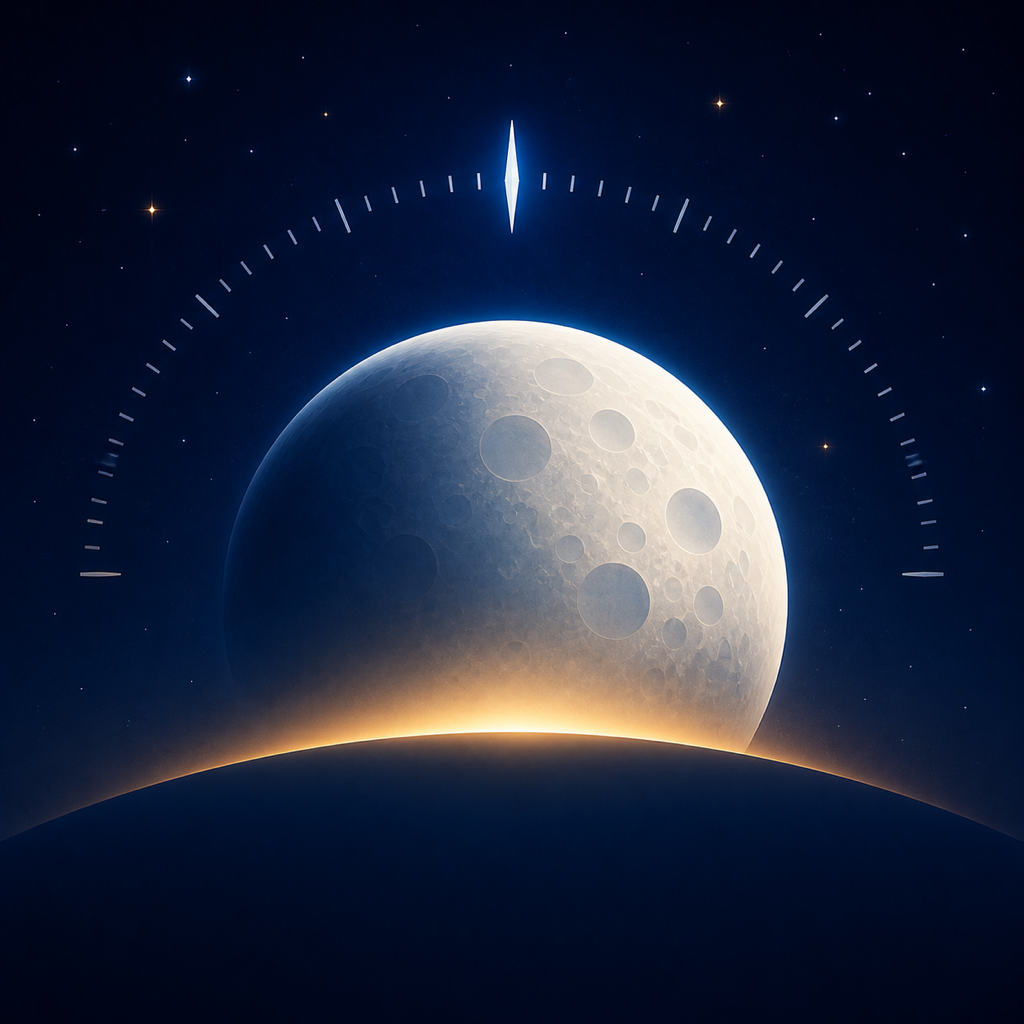
Shortly after new Moon, a thin crescent is directly illuminated by the Sun. The rest of the Earth-facing disk is in lunar night, yet it may remain faintly visible as a charcoal-gray circle. That glow is earthshine.
Sunlight reflects from Earth’s clouds, oceans, land, and atmosphere toward the Moon. The lunar surface reflects a small fraction of that light back to us. It is a two-bounce path: Sun to Earth, Earth to Moon, and Moon to observer.
Why it is strongest near a crescent
When we see a thin crescent Moon, an observer on the Moon would see a nearly full Earth. The bright Earth illuminates the lunar night side strongly. As the Moon waxes toward first quarter, Earth’s phase as seen from the Moon shrinks, and the brightening lunar crescent also overwhelms the subtle glow.
Evening earthshine is often easiest during the first few days after new Moon. Morning earthshine appears on a waning crescent before sunrise.
How to see and photograph it
Look during twilight, when the bright crescent is not painfully contrasted against a black sky. Binoculars reveal lunar maria inside the dim disk. A photograph must balance a large brightness range: an exposure that shows earthshine may overexpose the crescent. Bracket exposures or combine carefully aligned frames while preserving a natural result.