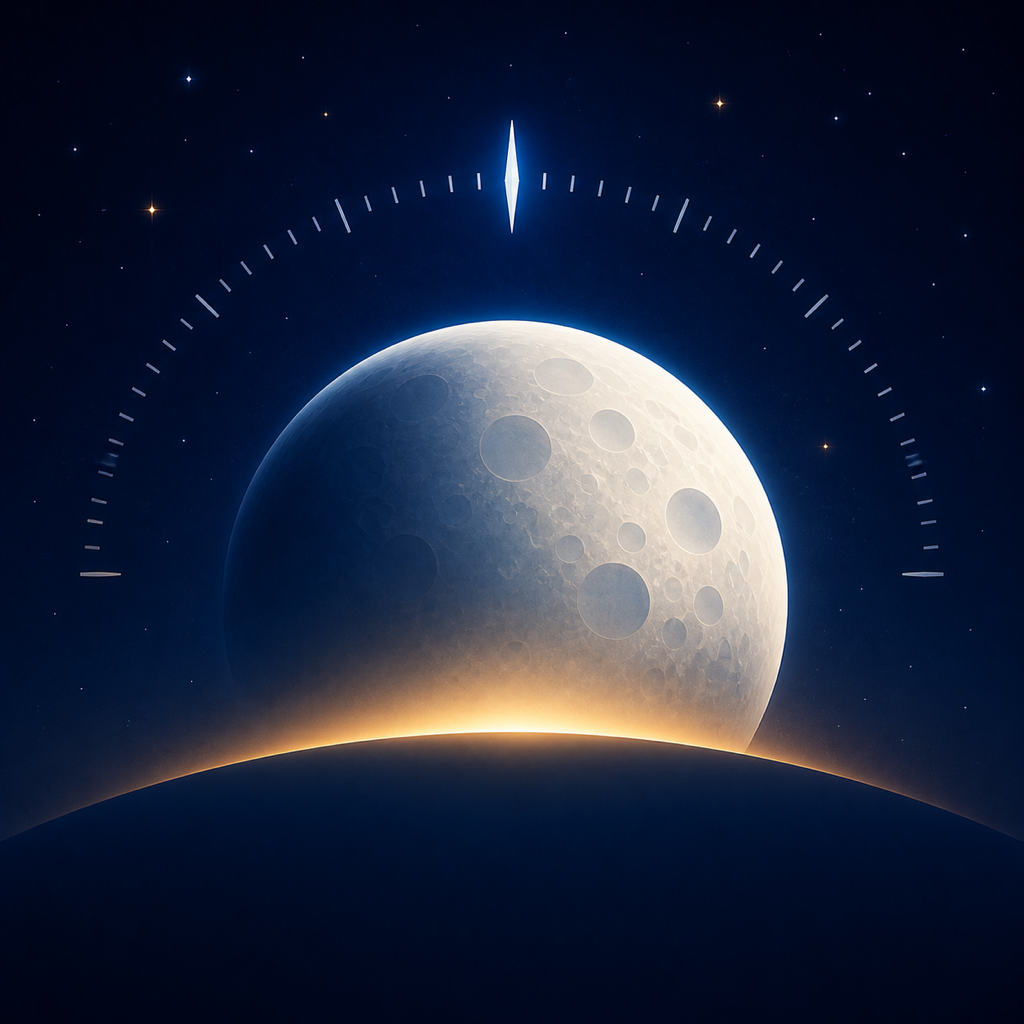
The eight Moon phases in order
The Moon repeats its phase cycle about every 29.5 days. Astronomers call this the synodic month: the time from one new Moon to the next, measured by the Moon’s angle relative to the Sun as seen from Earth.
- New Moon: The Moon is near the Sun in our sky, and its illuminated side faces mostly away from Earth.
- Waxing crescent: A thin lit arc grows each evening.
- First quarter: Half of the visible disk is illuminated and growing.
- Waxing gibbous: More than half is illuminated, but the Moon is not yet full.
- Full Moon: The Earth-facing side appears almost completely illuminated.
- Waning gibbous: More than half remains illuminated, but the lit fraction is shrinking.
- Last quarter: Half of the visible disk is illuminated and decreasing.
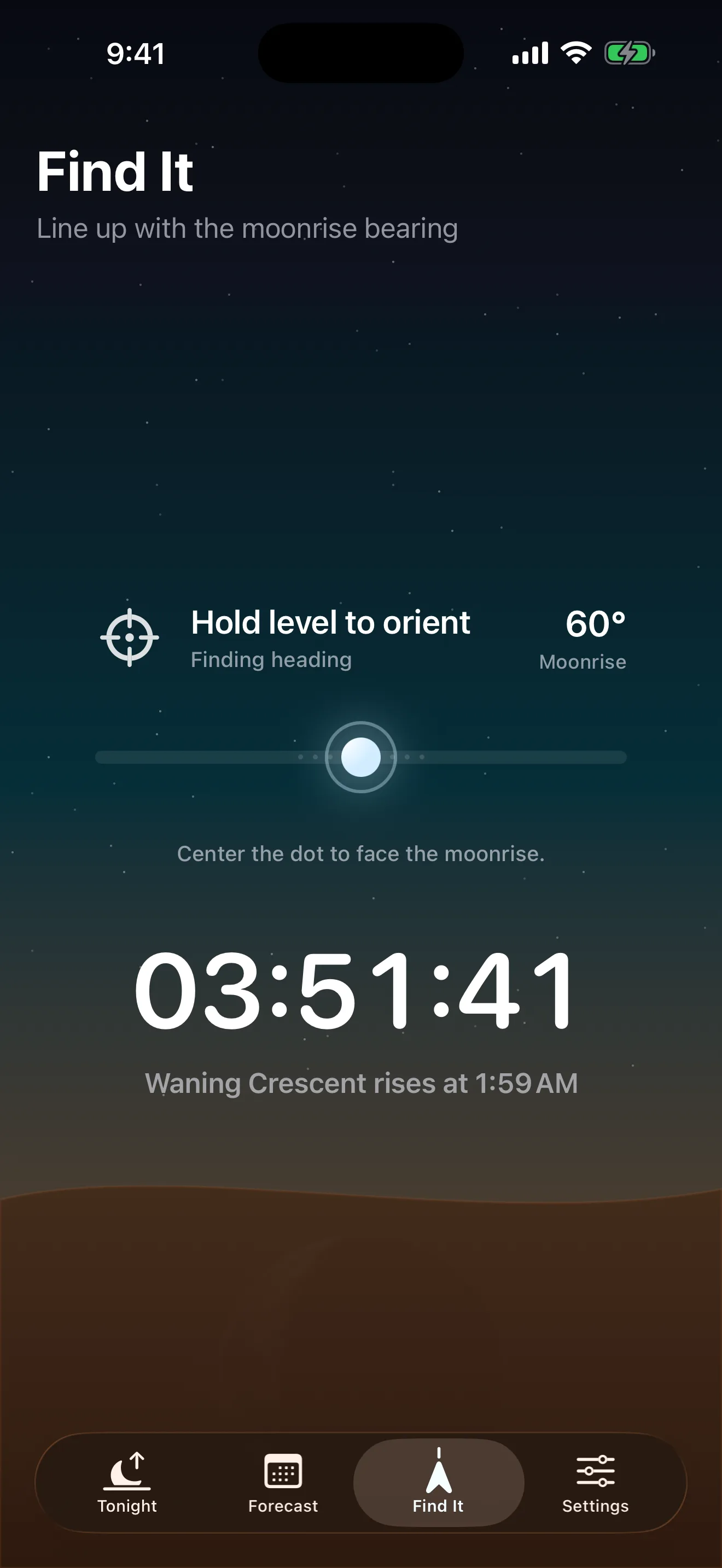
- Waning crescent: A thin lit arc remains before the cycle returns to new Moon.
Waxing vs waning, crescent vs gibbous
Waxing means the illuminated fraction is increasing. Waning means it is decreasing. These words describe whether the visible light is growing or shrinking, not which side appears bright.
A crescent Moon is less than half illuminated. A gibbous Moon is more than half illuminated but not full. Crescent and gibbous describe shape; waxing and waning describe direction through the cycle.
How phase maps to moonrise
Phase is not only visual. It tells you where the Moon is relative to the Sun in the sky. That makes it a rough clock.
- New Moon: Near sunrise. It is usually difficult to see.
- Waxing crescent: After sunrise. It is often visible in the western evening sky.
- First quarter: Around midday. It is high by sunset.
- Waxing gibbous: During the afternoon or early evening.
- Full Moon: Near sunset, setting near sunrise.
- Waning gibbous: After sunset, often later in the evening.
- Last quarter: Around midnight, becoming high near sunrise.
- Waning crescent: Before sunrise. It is often a dawn object.
Why the exact time still varies
These phase rules are useful, but they are approximations. The Moon’s orbit is tilted, elliptical, and changing against Earth’s tilted rotation axis. Your latitude also changes the angle at which the Moon crosses the horizon. That is why two full moonrises can happen at noticeably different sunset offsets.