A waxing Moon is growing brighter
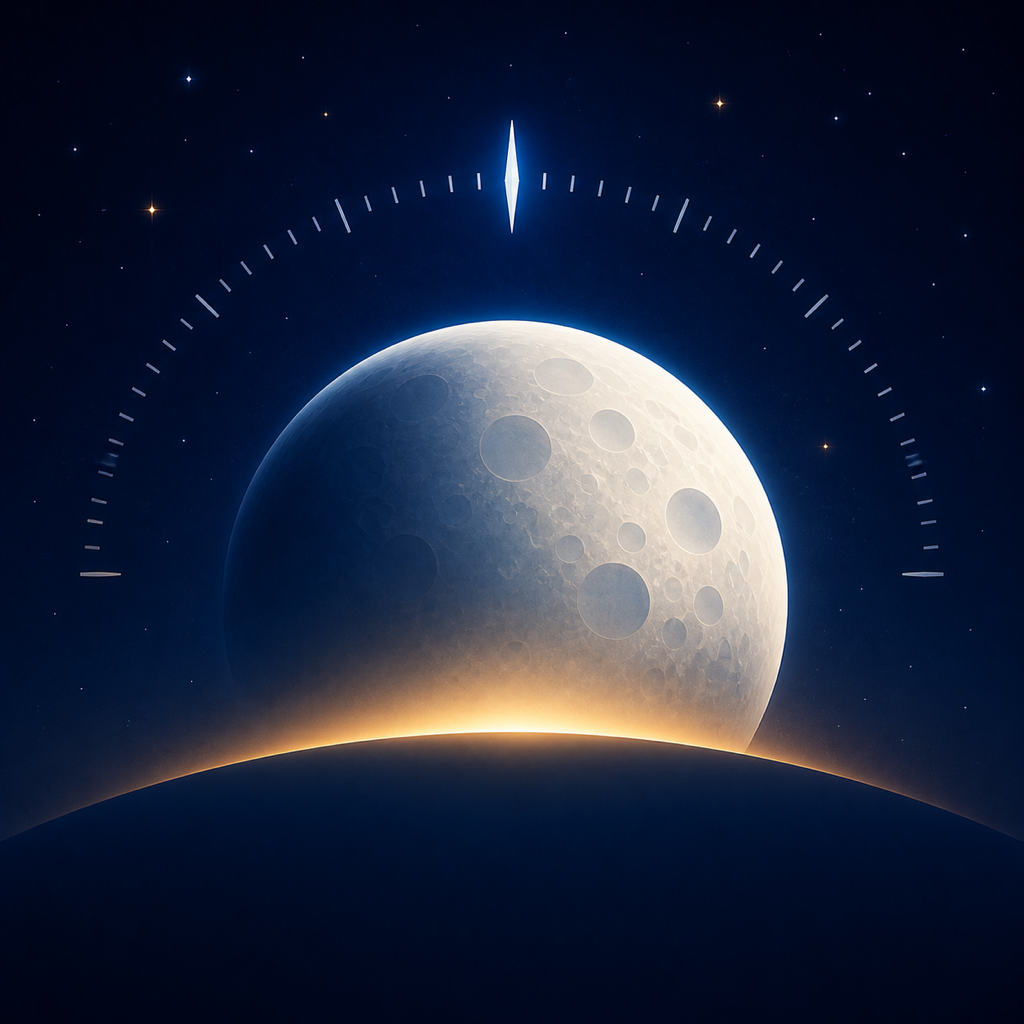
A waxing Moon is in the half of its monthly cycle when the sunlit portion visible from Earth is increasing. It begins just after the new Moon, becomes a slim evening crescent, reaches first quarter, then grows into a waxing gibbous Moon before the full Moon.
“Waxing” describes the changing amount of the Moon’s disk that sunlight illuminates from our point of view. It does not mean the Moon is physically getting larger.
For the concise definition, see the waxing Moon glossary entry. For the full cycle, see Moon phases and moonrise times.
Which phases are waxing?
The waxing portion of the cycle includes three familiar phase names:
- Waxing crescent: a thin curve of light grows after the new Moon.
- First quarter: about half of the visible disk is illuminated.
- Waxing gibbous: more than half is illuminated, but the Moon is not yet full.
The full Moon marks the turn. After it, the illuminated portion starts decreasing and the Moon is waning.
How to spot a waxing Moon
The most dependable clue is to watch on consecutive clear evenings. A waxing Moon appears more illuminated from one night to the next and generally shifts toward being visible later in the day and evening as it approaches full.
For many observers in the Northern Hemisphere, a waxing crescent is lit on the right and a waning crescent on the left. That visual shortcut reverses in the Southern Hemisphere, so use the changing illumination over several nights rather than relying on one orientation alone.
When does a waxing Moon rise?
The exact time depends on your location and the Moon’s orbit, but phase gives a useful starting point. A waxing crescent is commonly an afternoon or evening object, first quarter is high around sunset, and a waxing gibbous Moon rises from afternoon into early evening. Near full, moonrise happens close to sunset.
Use a location-specific moonrise time when planning an observation, especially near buildings, hills, or a narrow viewing window. A clear eastern horizon matters most when you want to catch the first appearance of the Moon.
Waxing versus waning
Waxing means the illuminated fraction is increasing on the way to full; waning means it is decreasing on the way to new. Both are normal parts of the same cycle. If you know whether the Moon is waxing or waning, you can make a better first guess about its phase, likely rise time, and whether it is an evening or pre-dawn sight.