A seasonal name, not a color forecast
“Strawberry Moon” is a widely used name for the Full Moon occurring in June. The name is commonly connected with the seasonal ripening of strawberries in parts of North America. It does not mean the lunar surface will become pink or red.
Moon names have multiple cultural histories, translations, and regional uses. A single modern list should not be treated as one universal Indigenous naming system. Different nations and communities maintain distinct calendars and relationships with seasonal change.
Why June’s Moon can still look warm-colored
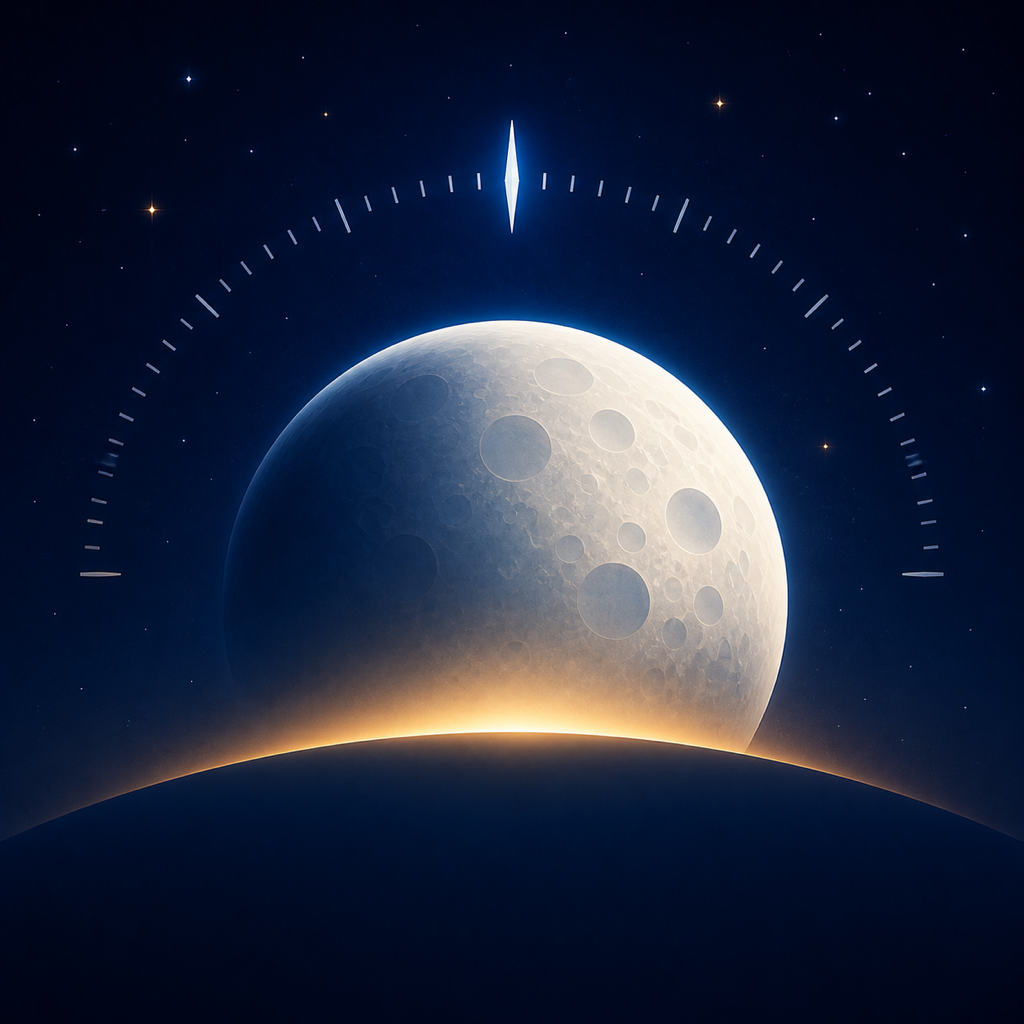
Any Moon may appear yellow, orange, or red near the horizon. Its light travels through a longer path of atmosphere, where blue wavelengths are scattered more efficiently. Dust, smoke, humidity, and haze can strengthen the effect.
At mid-northern latitudes, a June Full Moon follows a relatively low arc across the sky because it lies opposite the high summer Sun. That can keep it in thicker atmosphere for longer and create more opportunities for warm color. Southern Hemisphere geometry is reversed.
Planning a Strawberry Moonrise
The best photograph may occur the evening before or after the exact Full Moon. Compare local moonrise with sunset and check the azimuth against your foreground. A low ridge or skyline can delay first sight, so arrive before the published rise time and watch the horizon brighten.