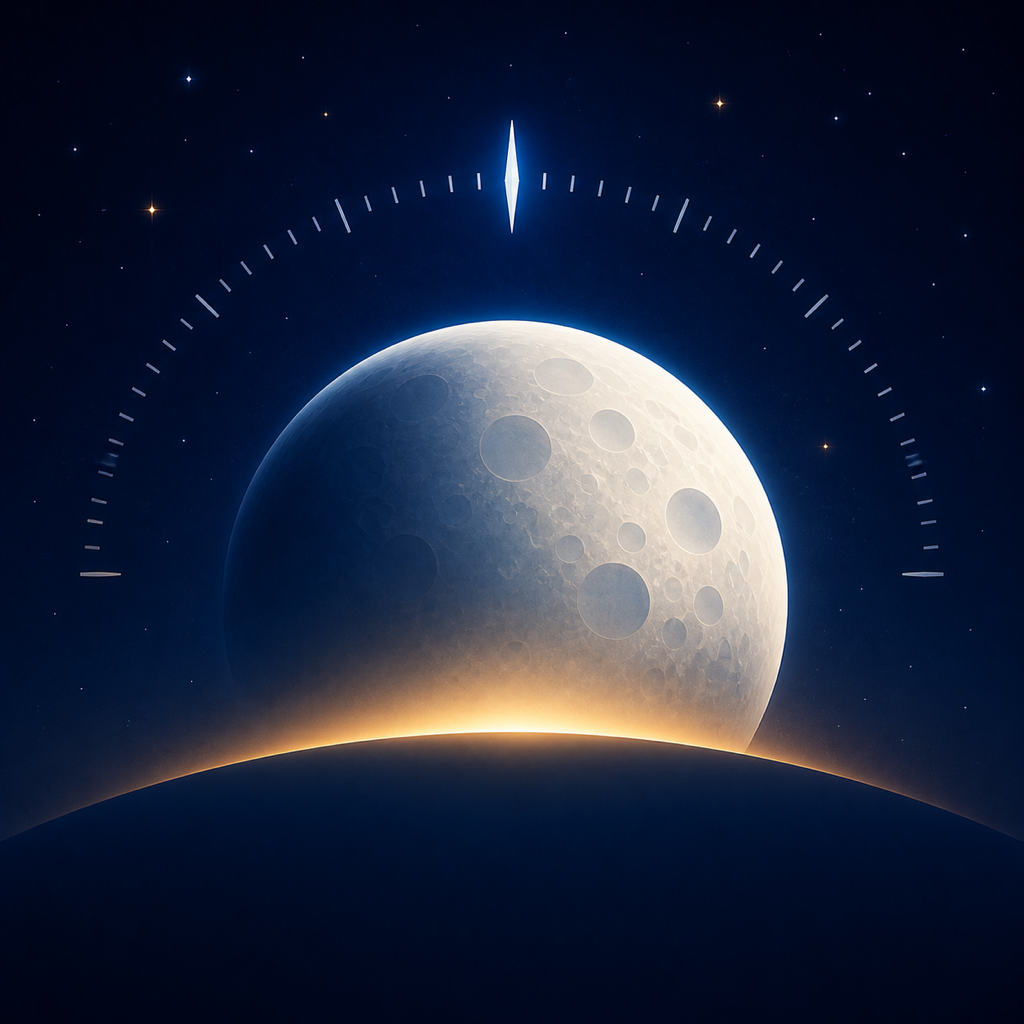
partial lunar eclipse
Partial lunar eclipseJanuary 12, 2028
A small portion of the Moon enters Earth's central shadow during this brief partial eclipse.
Maximum eclipseWednesday, January 12, 2028 at 4:14 AM UTC
Broad visibilityThe Americas, Europe, and Africa
TypePartial lunar eclipse
Local time and visibility at maximum eclipse.
These times convert NASA's moment of greatest eclipse into each city's local time zone and calculate the Moon's altitude above or below the geometric horizon.
| City | Local maximum | Moon altitude |
|---|---|---|
| SingaporeSingapore | Below horizon62° below | |
| Kuala LumpurMalaysia | Below horizon59° below | |
| ParisFrance | Above horizon33° up | |
| TokyoJapan | Below horizon29° below | |
| DelhiIndia | Below horizon25° below | |
| SeoulSouth Korea | Below horizon30° below | |
| TehranIran | Below horizon4° below | |
| MelbourneAustralia | Below horizon63° below | |
| LondonUnited Kingdom | Above horizon35° up | |
| SydneyAustralia | Below horizon59° below |
What you’ll see.
During a partial eclipse, only part of the Moon enters Earth’s dark umbral shadow, creating a distinct curved edge across the lunar surface.
An eclipse is only observable when the Moon is above your local horizon. The exact date may differ by one day from UTC depending on your time zone.
Check your city.
TehranIranNew YorkUnited StatesLos AngelesUnited StatesSan FranciscoUnited StatesChicagoUnited StatesTorontoCanadaVancouverCanadaMexico CityMexicoSão PauloBrazilLondonUnited KingdomParisFranceBerlinGermanyMadridSpainRomeItalyIstanbulTürkiyeDubaiUnited Arab EmiratesRiyadhSaudi ArabiaTel AvivIsraelKarachiPakistanIslamabadPakistanLahorePakistanMumbaiIndiaDelhiIndiaSingaporeSingaporeKuala LumpurMalaysiaTokyoJapanSeoulSouth KoreaSydneyAustraliaMelbourneAustraliaAucklandNew ZealandCape TownSouth AfricaCairoEgypt
Prediction data: NASA Goddard lunar eclipse catalog, 2021-2030. Local horizon positions are calculated independently by Moonrise Moment.