Expose for the Moon, not the dark sky
The Moon is a sunlit landscape. Against a dark sky, automatic exposure often turns it into a white featureless circle. Tap the Moon to set focus and metering, then drag exposure downward until surface markings return. Lock focus and exposure when your camera app allows it.
Night mode is useful for landscapes but can overexpose the Moon or blur it during a long capture. If the Moon is the main subject, shorten the exposure. If the scene matters, bracket a Moon exposure and a landscape exposure without changing framing.
Use a real lens before digital zoom
Choose the phone’s optical telephoto camera if available. Digital zoom mostly crops and enlarges the image, revealing processing artifacts rather than new detail. Clean the lens and avoid shooting through glass, which adds reflections and softness.
Stabilize the frame
Brace the phone against a fixed object or use a tripod and timer. Even a short delay prevents movement from tapping the shutter. Keep ISO as low as practical and capture several frames; atmospheric turbulence makes some sharper than others.
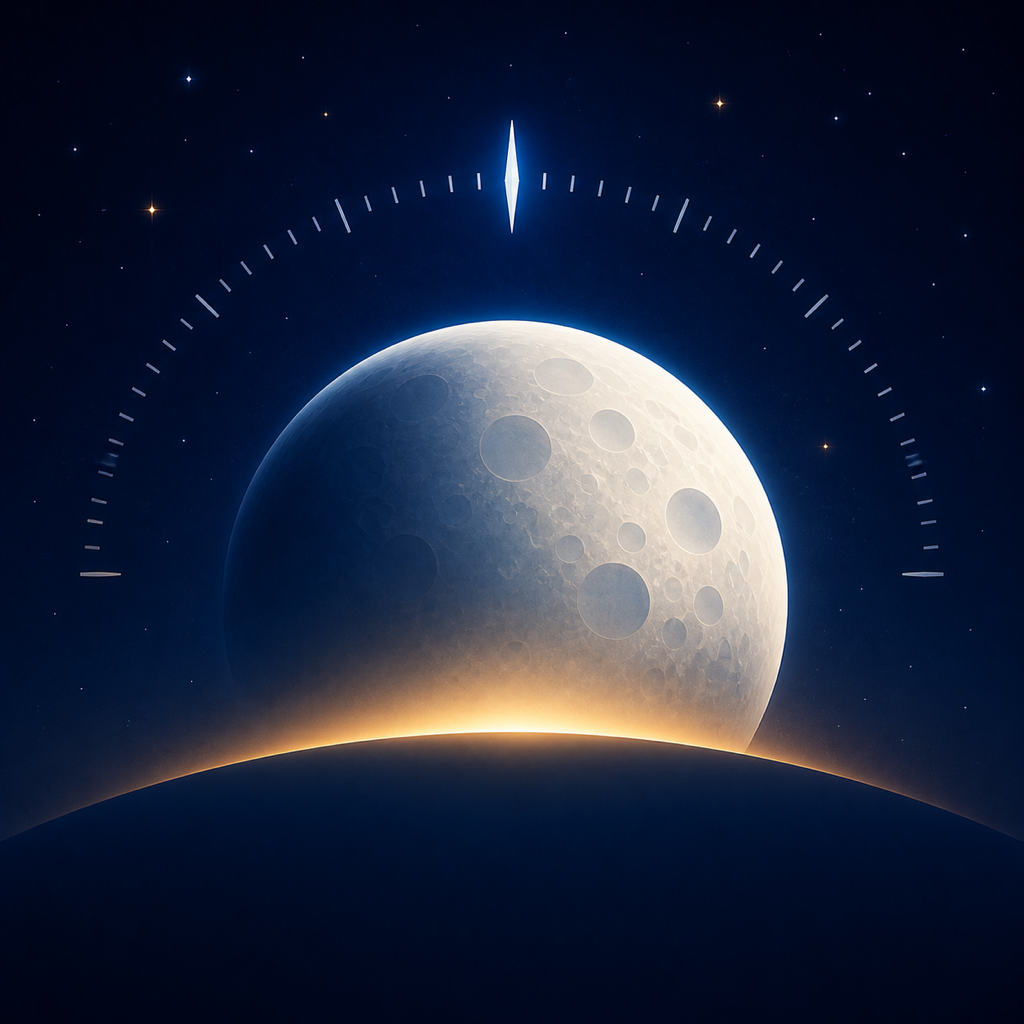
For a compelling moonrise photograph, consider a wider composition with a person, skyline, or ridge. A tiny but correctly exposed Moon in a meaningful scene can be stronger than a heavily enlarged disk with no context.