How moonset differs from moonrise
Moonset is the moment the Moon’s upper edge disappears below an observer’s horizon. Standard published times assume a level horizon and account for atmospheric refraction, but hills, buildings, trees, and haze can make the visible Moon vanish earlier.
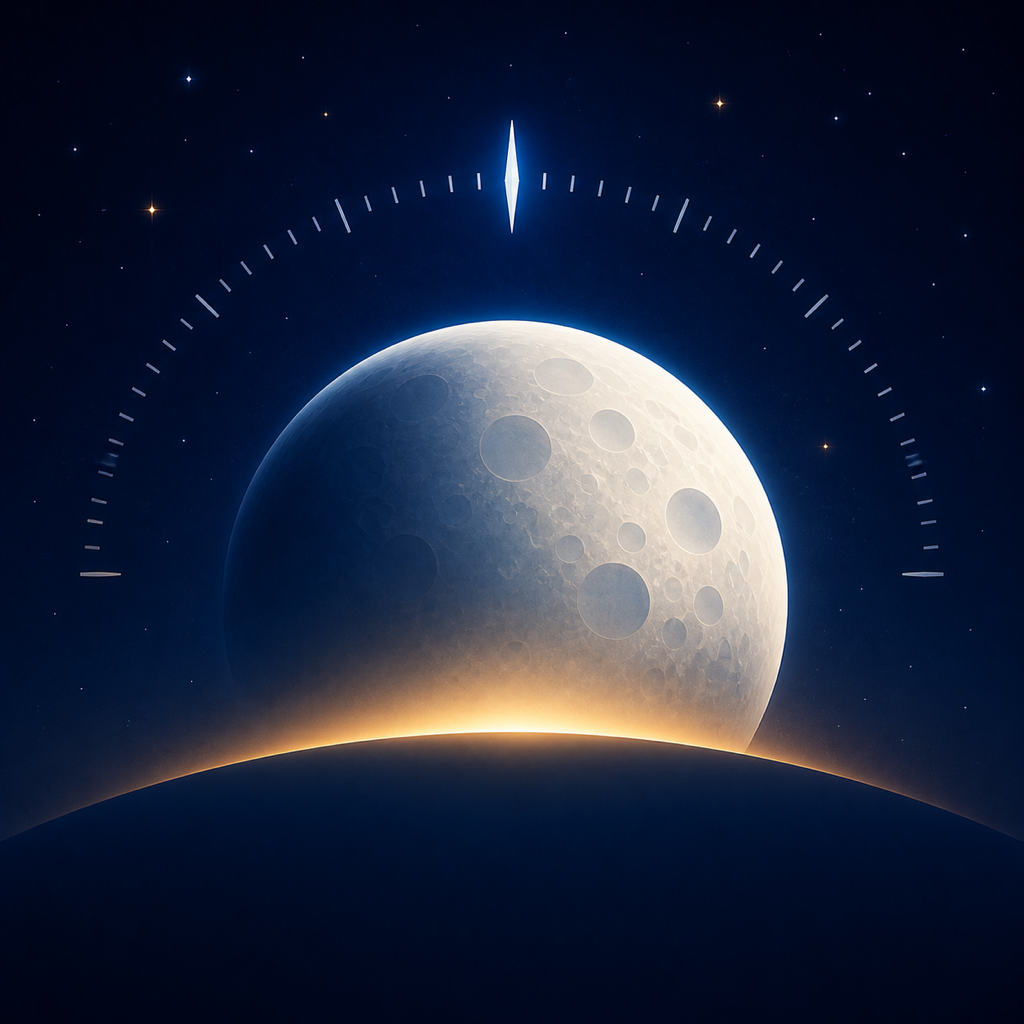
The event is the opposite of moonrise, when the Moon’s upper edge appears above the horizon. The glossary entries provide the concise definitions; this guide compares how the two events look and behave.
The direction is usually opposite
For most observers, moonrise happens somewhere in the eastern half of the horizon and moonset happens somewhere in the western half. The exact azimuth changes with the Moon’s declination and your latitude.
The visual experience is different
Moonrise often feels like a reveal because the Moon appears from behind the horizon and climbs into the sky. Moonset feels like a disappearance. Both can be beautiful, but moonrise is usually easier to plan around if you want to watch the first visible edge.
Phase changes both events
A full Moon rises near sunset and sets near sunrise. A new Moon rises near sunrise and sets near sunset, but it is usually not visible because its sunlit side faces away from Earth. Quarter and crescent phases shift the timing across day, night, and twilight.
Which one should you watch?
- Watch moonrise when the Moon rises after sunset and you have an open eastern horizon.
- Watch moonset when the Moon is bright before dawn and you have a clear western horizon.
- Choose the event that puts the Moon near your best foreground.
- For casual viewing, prioritize the event that happens during comfortable waking hours.