Horizon altitude is the missing variable
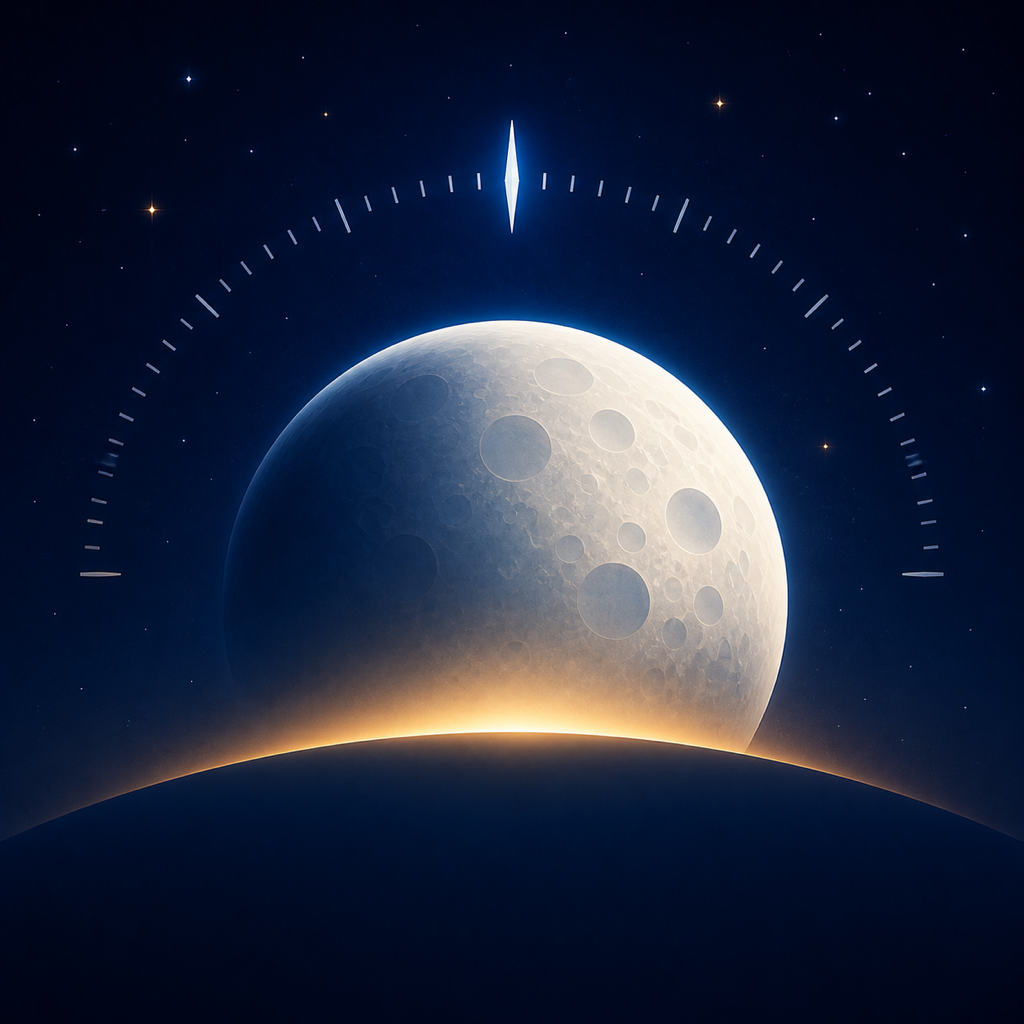
A flat sea horizon is close to the ideal horizon used by many basic rise and set calculations. A hill, ridge, city skyline, or forest line has a positive horizon altitude. The Moon must climb to that altitude before you can see it.
Even a small obstruction matters. The Moon moves across the sky at roughly half a degree per hour relative to the background stars, while Earth rotation carries it upward much faster near rise. Depending on the angle of the Moon’s path, a few degrees of blocked horizon can mean several minutes of delay.
Observer height can help
Standing higher lowers the geometric horizon because you can see farther around Earth’s curve. That can make a clean ocean moonrise appear slightly earlier. But if the limiting horizon is a nearby hill or building, moving higher only helps if it clears the obstruction.
Topocentric is the word to know
Astronomers distinguish between geocentric positions, measured from Earth’s center, and topocentric positions, measured from the observer’s actual place on Earth. Moonrise planning needs the topocentric view because the Moon is close enough for parallax to matter.
How to scout a better spot
- Find the expected moonrise direction first.
- Look for a low horizon in that direction.
- Move sideways if the foreground blocks the exact azimuth.
- Move higher only when height actually clears the obstruction.
- For photos, choose a foreground that frames the Moon without hiding it too long.