Check the lowest part of the sky
A general weather forecast can say “clear” while a thin cloud bank sits directly on the eastern horizon. For moonrise, that narrow band matters more than most of the sky. Check low cloud cover in the expected moonrise direction, not only the overall cloud percentage.
Coastal areas often develop marine layers near the horizon. Valleys can hold mist. Wildfire smoke, dust, and urban pollution can create a low band of poor contrast. Even when these layers are thin enough to transmit moonlight, they can delay the first obvious sight by several minutes.
Haze can help color and hurt clarity
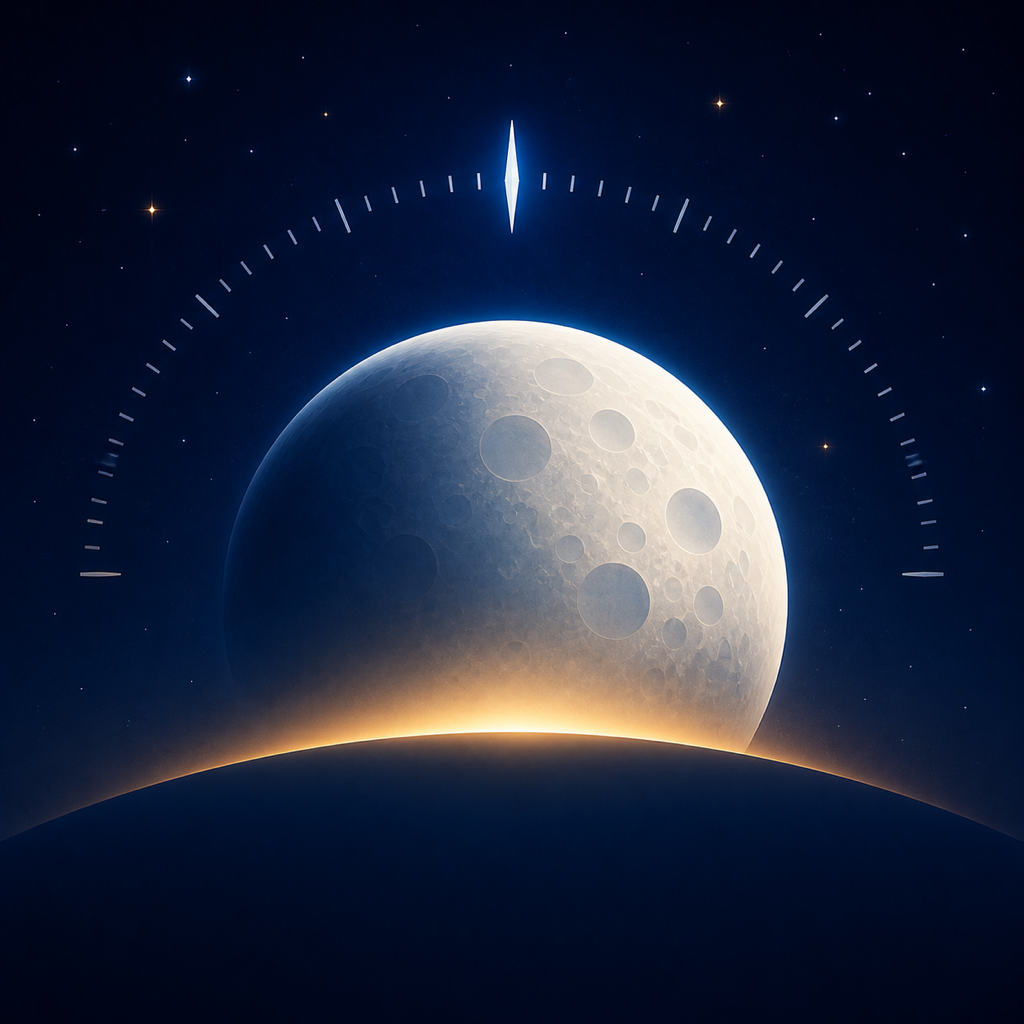
Moonlight passes through a long path of atmosphere when the Moon is low. Shorter blue wavelengths scatter more strongly, leaving the rising Moon with a warmer yellow, orange, or red appearance. The same path reduces contrast and sharpness.
A bright full Moon may push through moderate haze and produce a dramatic warm disk. A thin crescent can disappear in similar conditions. Phase and illumination matter as much as the weather report.
Refraction changes apparent position
Atmospheric refraction bends light from a celestial object as it enters denser layers of air. NOAA notes that this makes objects near the horizon appear higher than their geometric position. Rise and set calculations use a standard refraction assumption, but real conditions vary with pressure, temperature, and humidity.
Refraction is strongest and least predictable close to the horizon. It can also distort the lunar disk, flattening or rippling its lower edge. These effects are normal and usually fade as the Moon climbs.
Twilight changes contrast
A full Moon near sunset can be bright enough to see easily in twilight. A slender crescent or a partially illuminated Moon may need a darker sky. The timing relative to civil and nautical twilight changes how much contrast you have against the background.
The National Park Service notes that the Moon is the brightest natural source in the night sky. A full Moon can illuminate the ground far more strongly than a moonless sky. That brightness makes full moonrise forgiving, while dimmer phases reward careful planning.
A moonrise visibility checklist
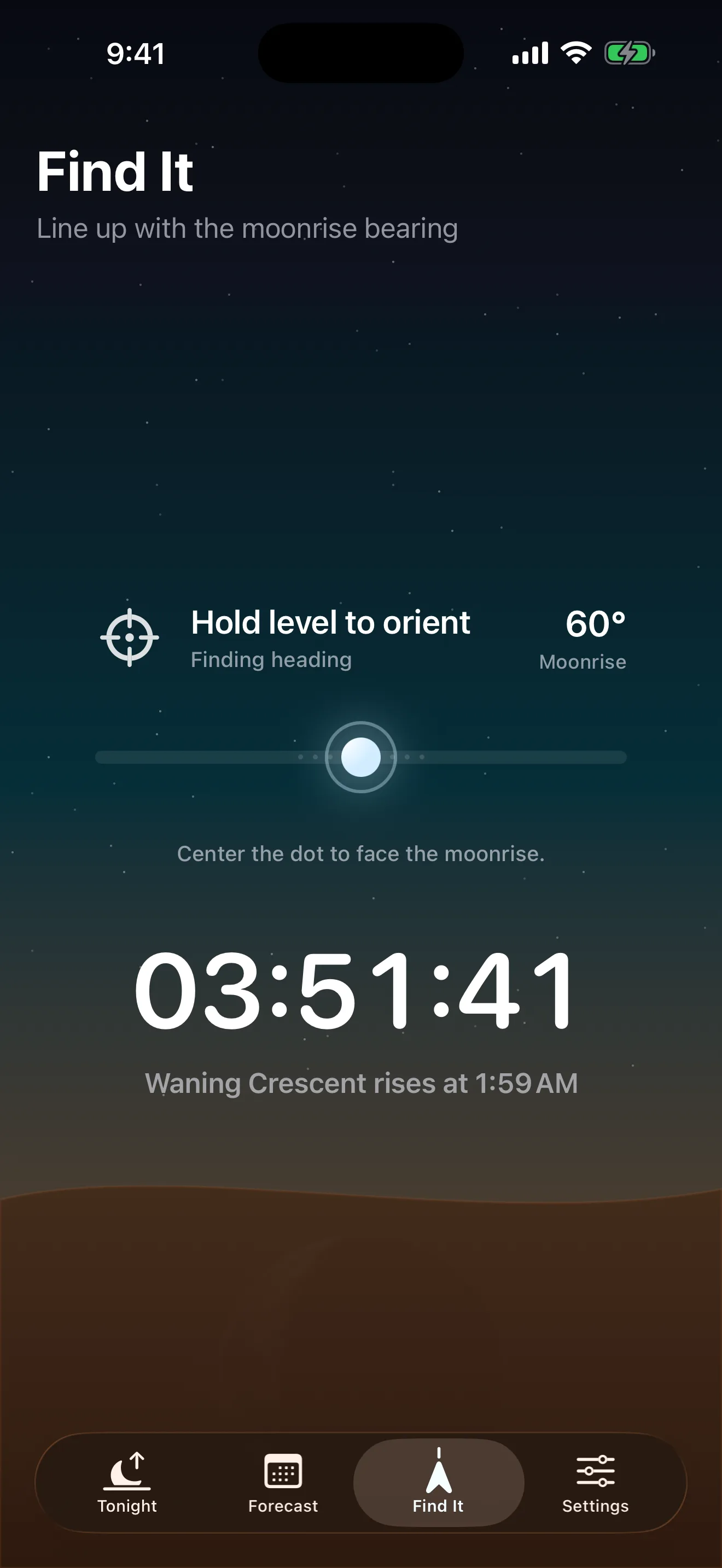
- Find the expected bearing, not only the rise time.
- Inspect low cloud and visibility in that direction.
- Look for terrain, buildings, and trees above the horizon.
- Consider the phase and how bright the Moon will be.
- Arrive early enough for your eyes to settle into the light level.
- Keep watching above the calculated horizon if haze hides the first edge.
When to wait and when to move
If the entire horizon is blocked by terrain, moving to a higher or more open viewpoint can help. If a small cloud bank is drifting, waiting may be enough. The Moon moves roughly its own apparent diameter across the sky in about two minutes, so conditions can change quickly after the calculated rise.
Treat the published time as the beginning of a viewing window. Direction, obstruction, and weather determine the moment you actually see.